
NORTHEASTERLY: Ye Olde Theater on Main Street

In this Northeasterly, we review some recent economic data and then dig into a couple of revitalized community-focused theaters that have caught my attention over the past few years. If you’ve been keeping up since we soft-launched Northeasterly a couple of months ago, you know that we like to focus most of our work on economic development best practices and case studies from around the region.
That said, we like to think that these pieces might also appeal to municipal leaders, state legislators, community bankers, non-profit leaders, and the real estate community.
Data Download
 Inflation picked up the pace a bit in May, with overall consumer prices up 5.0% month-over-year (versus May of 2025). Gasoline prices were up 44.9% month-over-year and were up a remarkable 11.1% month-over-month (versus April of 2026). Household energy prices in May were 13.5% above May 2025, while fruit and vegetable prices were up 8.5% versus May 2025. For more on inflation, see the Bureau of Labor Statistics data here.
Third quarter 2025 county-level wage and employment data was updated. Third quarter wages in Maine were up 5.0% quarter-over-year (versus 3rd quarter 2024), which ranked 10th nationally. Third quarter wages in New Hampshire were up 5.5% quarter-over-year (6th among states). Vermont lagged those two states somewhat, with 4.4% wage growth quarter-over-year (21st among states). For more employment and wage updates, see the BLS data here.
The Beige Book released by the Boston Fed on June 3rd tells it like it is.
- “…The outlook was mixed, as consumer-facing businesses reported decreased confidence, while business-facing firms became more optimistic.”
- “Employment was mostly unchanged, as selective layoffs largely offset a pickup in hiring. Wages and benefits rose slightly on average, although many firms reported flat compensation. Job openings increased slightly for firms in the manufacturing, retail, accounting, legal, and staffing services industries…”
- “…Manufacturers and retailers said increased shipping costs cut into profits, and manufacturers also faced higher raw materials costs. Construction contacts experienced moderate to strong cost pressures not exclusively linked to the conflict, including property taxes and borrowing rates, in addition to energy prices….”
- “…Retailers reported modest gains in revenues, while tourism contacts described activity as flat, noting higher fuel prices had squeezed recreational budgets…”
- “…The outlook improved on balance, as half of contacts became more optimistic and the rest said the outlook was stable and optimistic. Some contacts noted that uncertainty remained high. However, none felt that uncertainty had increased recently, and one commented that businesses had gotten used to uncertainty and were moving forward with decisions anyway…”
- “Real estate sales and leasing activity softened slightly, while construction activity ticked up… Home inventory remained scarce, keeping prices elevated. Pending sales and new inventory both increased from a year earlier, generating optimism for the rest of the spring season…Construction activity and revenues increased slightly overall, even though multifamily construction slowed somewhat. Construction firms experienced diminished profits following recent cost increases. The outlook for nonresidential activity and for construction dimmed on increased uncertainty tied to the Middle East conflict…”
The Conference Board’s Leading Economic Indicators confirm the fragility in the economy and substantial concerns of the U.S. consumer…but do not indicate that a recession is likely or imminent.
Theaters on Main Street

I’ve been interested in (obsessed with?!) old theaters for the past couple of years, in part because of some work I did with The Colonial Theater in Keene (NH) to help them get federal funding to reinvigorate the former cinema as a performing arts center and cultural heart of downtown.
A century ago, nearly every American town had a movie theater at its heart. Before home televisions were available, accessing entertainment meant going out: heading downtown to a busy single-screen theater to see the latest new release. At the peak of cinema, there were 18,000 theaters spread across the country, each one a “people’s palace” driving foot traffic to Main St. and defining the small-town streetscape. However, in the decades since, American theaters have been consolidated into a few thousand multiplexes. The few survivors have faced a series of threats from TV, streaming, the pandemic, and the slow death of civic and social life in America…and yet, many small-town theaters 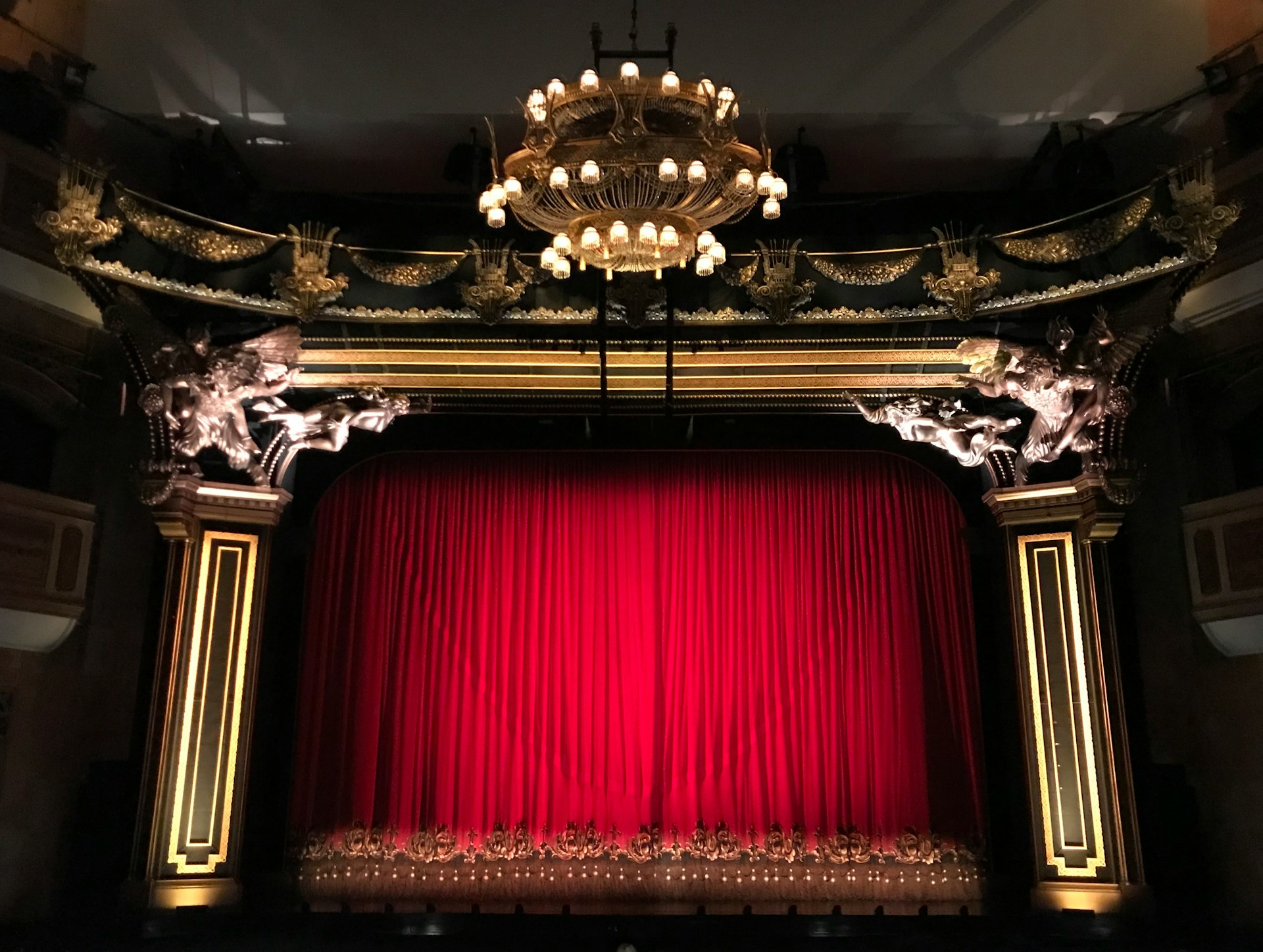 are the most recognizable buildings in downtowns for which quality of place and visual appeal remain critically important.
Today, these spaces represent a real challenge and opportunity for New England towns. A theater is highly recognizable, central, and historic, but also difficult to convert to a new use. Among the challenges are the unique layouts, outdated structures, and sloping poured concrete floors. These old theatres may be too expensive to fully demolish and rebuild, but they also struggle to compete with the modern array of entertainment options and struggle to compete with modern multiplexes (at least when operated as for-profit theaters). Thus, many of these iconic buildings sit vacant.
Across New England, some innovative strategies have emerged to keep theaters bustling despite the challenges. Through historic renovation and operation as a nonprofit, these alternative models boost each town’s economy, benefit the arts scene, and bring together the community. There are many such theaters doing really wonderful things and contributing meaningfully to the economic vitality of their downtowns – two such theaters are The Prospector (Ridgefield, CT) and The Latchis (Brattleboro, VT).
Prospector Theater
📍Ridgefield, CT
Going to the movies is “a staple of American Main Streets,” says Ryan Wenke of the Prospector Theater in Ridgefield, Connecticut. But amid the rise of streaming services, it takes a unique reason to get people out of the house and in front of a Prospector screen. Originally built in the 1930s, the historic Ridgefield Playhouse fell into disuse in the 1970s, leaving a hole in the small Connecticut town. It was briefly used as a bank, but by 2010, it was set to be demolished — cheaper to turn into parking for the town library than to maintain the historic façade.
In stepped a founder with a mission: Valerie Jensen wanted to operate a vibrant movie theater and to provide meaningful employment to people with disabilities (Jensen’s sister was born with Down syndrome). Jensen reopened the Playhouse as a nonprofit, creating dozens of employment opportunities — operating projectors, producing video content, and managing the front of house. About half of revenue comes from tickets and concessions, while the remainder comes from donations and private foundation grants. This mix of income streams helped them weather the ups and downs of the post-pandemic period. The theater has also begun to produce popcorn for retail sale.
The Prospector’s audiences have grown even as historic theatres in neighboring towns have shuttered. The Prospector now plays an enormous role in the Ridgefield community, while supporting over a hundred jobs and lifting up the value of nearby real estate.
- For photos and more background about The Prospector, see the theater’s website.
- Sunday Today did a brief (3 minute) piece on The Prospector that is worth watching to get a sense of the vibe!
Latchis Arts
📍Brattleboro, VT
The Latchis Theatre and Hotel was built in 1938, a “picture palace” and 40-room hotel complex that visually dominates Main Street in the small Vermont town of Brattleboro. Like the Prospector, the art deco building was in a derelict condition throughout the 1970s and 1980s. At the same time, Brattleboro was suffering from the closure of factories and the replacement of its small businesses with big-box stores. Today, however, a bustling arts community revolves around a transformed Latchis Arts Building, serving as a testament to the community impact of historic theater restoration projects.
The Brattleboro Arts Initiative formed in 1998 to expand the performing arts scene in the town. But when the Latchis came up for sale in 2003, the organization’s mission shifted to include historic stewardship alongside arts promotion. Public grants and private donations were used to acquire the building and restore its vitality. The facility is owned by a nonprofit historic preservation trust, with the theater and hotel operations managed as for-profit entities. This way, its iconic façade and ornate interior still provide unique architectural flair, while the busy performance schedule and the new micro-brewery in the basement draw the crowds.
The restoration hasn’t been without challenges—Hurricane Irene flooded the theater in 2011, forcing closure for a season and delaying planned upgrades to the facility. However, the multiple revenue streams and flexible model with mixed for-profit and non-profit elements helped it to swiftly recover. Today, the theater screens new release films and hosts regional philharmonic performances. Moreover, arts have blossomed in Brattleboro beyond the walls of Latchis Arts, with artisan markets and gallery walks bringing tourists from all around New England.
- If you want to see some images of the beautiful Latchis Arts Center, please check out the website.
New to Northeasterly? Check out our (small but growing) archive here.
Until next time…be well, stay safe, and shop local!
This Northeasterly was completed with help from @Addison Davis. If you operate or serve on the board of a non-profit theater organization and want to share some “lessons learned” about how you financed your theater renovation, I’d be thrilled to hear from you! If you have a favorite old theater in New England that you think I should visit, I’d love to hear from you! Please feel free to contact me at jacob@harpswellstrategies.com.


