
NORTHEASTERLY: Coworking Spaces in Rural Communities
Exploring Public Workspaces in Rural Places
In this Northeasterly, we take a quick look at some recent data releases (inflation for the Northeast Region and metro area labor force and unemployment data) and then look at an approach that some rural communities have used to finance publicly accessible workspaces to drive economic development in their communities.
Data Download
Inflation
On May 12, the U.S. Bureau of Labor Statistics released regional inflation data. The inflation rates (consumer price index) for key categories are…astonishing…or more precisely, 4.4% for all items.
- The price of “food at home” increased by 4.2% from April 2025 to April 2026. Fruit and vegetable price increases were particularly steep at 8.3%.
- The price of shelter increased by 4.8% during that time.
- Fuel and energy prices increased by 13.6%, with household energy prices up 15.6% and electricity prices up 12.1%.
- The cost of unleaded regular gasoline is up 31.5% compared to April 2025 and is up 37.3% since February of 2026.
State & Metro Employment
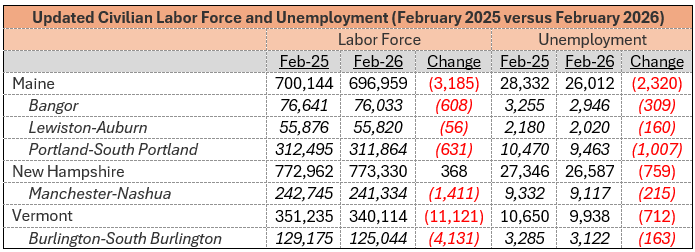
With respect to labor force and unemployment data from the U.S. Bureau of Labor Statistics, we continue to see declining unemployment levels paired with relatively sharp declines in the labor force. The declining working age population across the region is a real problem and adding structural shifts in the economy on top of that could also mean that some folks are giving up on finding new jobs – we’ll keep an eye on that in the months to come.
Bringing Co-working Spaces to Rural New England Communities
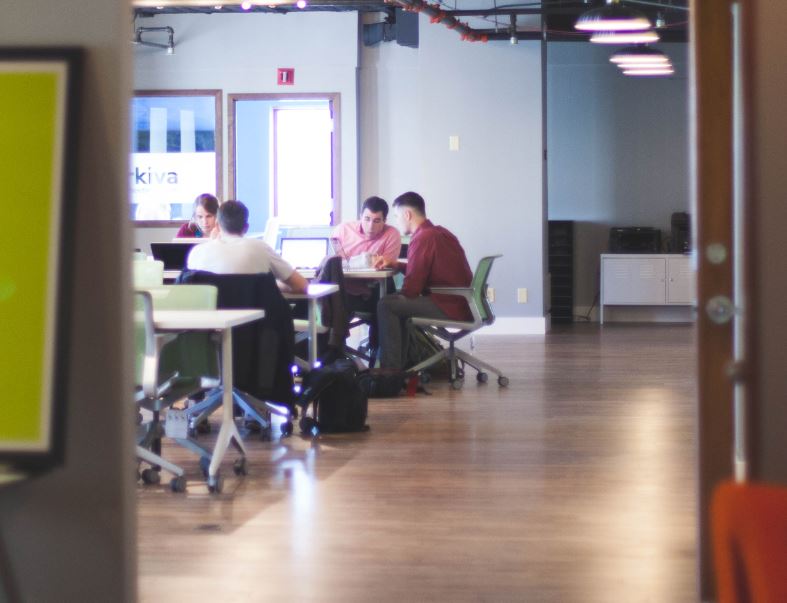 Small and rural communities cannot rely on the market to deliver options that will serve the remote workers and entrepreneurs. Federal grant funding can fill the gap when the market doesn’t step up. Several such projects have been funded through the Northern Border Regional Commission’s Catalyst Grant Program.
Towns that are planning improvements, expansions, or renovations to public buildings – such as public libraries, town halls, and community centers – should consider whether such facilities can also accommodate remote workers or could otherwise be used to facilitate high-wage work, innovation, and entrepreneurship. The Catalyst Grant Program is an economic development grant program, and therefore community facility capital projects must have a clear economic development impact to compete for limited funds (next funding round is this fall!). Over the past four years, several such projects have been funded by NBRC. Five examples are below:
Example 1: Littleton Community Center Project
NBRC funds will be used to restore the historic Carriage Barn, expand business use of the Community House, and increase tourism through heritage experiences. This project will create a new meeting/performance space, remodel the third floor into rentable offices, and establish guided tours of the two National Register-listed buildings. By preserving these historic properties and enhancing community infrastructure, LCC aims to support economic development, cultural engagement, and long-term sustainability in Littleton. Location of Project: Grafton County, NH; Grant Amount: $1,000,000; Total Project Amount: $2,088,342
Example 2: Newport Chamber of Commerce Project
NBRC funds will be used to renovate the historic railroad depot, transforming it into the Newport Welcome Center with a public Wi-Fi hotspot. This project will restore architectural features, create a community meeting space with an ADA-compliant restroom, and provide rental opportunities to support ongoing operations. By repurposing the building, the initiative aims to enhance economic and tourism activity, strengthen local engagement, and integrate with surrounding public amenities. Location of Project: Sullivan County, NH; Grant Amount: $500,000; Total Project Amount: $963,000
Example 3: GALA Community Center
This project is a Business and Workforce Development Initiative building upon the success and momentum of GALA Community Center’s makerspace and vocation hub, Makers Mill. Makers Mill will develop workforce, entrepreneur, and small business programming and resources that align with local and regional development plans and results in new businesses, job creation and a more prepared workforce. Location of Project: Carroll County, NH; Grant Amount: $499,883; Total Project Amount: $1,057,690
Example 4: WREN (Women’s Rural Entrepreneurial Network) Center
The project will renovate the interior of the Gallery to increase accessibility and community engagement; convert the lower level to a Learning Center with a Media Studio; and make the outdoor Pocket Park more usable, accessible, and attractive as a gathering space. Location of Project: Grafton County, NH; Grant Amount: $65,079.60; Total Project Amount: $128,883.13
Example 5: Jesup Memorial Library Expansion
This project funded a Mass Timber Expansion to a 1911 public library building in downtown Bar Harbor, using cross-laminated timber (CLT) manufactured from eastern hemlock sourced in the northeastern United States. The expansion will create substantial additional flexible interior space for laptop users. Location of Project: Hancock County, ME; Grant Amount: $600,000; Total Project Amount: $9,305,090
Keep an eye out for more Northeasterly in June! We’ll continue digging into some of the region’s co-working spaces and business incubators. If you have a favorite co-working space or business incubator in the region, let me know by reaching out via email at jacob@harpswellstrategies.com.


